


Stress is often described as “mental” or “emotional,” but its effects are not limited to how we feel. Stress is a whole-body response that influences the nervous system, immune activity, digestion, sleep quality, and—crucially—hormonal signalling.
Short-term stress can be useful. It helps the body respond to challenges, stay alert, and mobilise energy when needed. However, when stress becomes chronic, the body can begin operating in a state of ongoing adaptation. Over time, this may affect hormonal balance and contribute to symptoms such as fatigue, cravings, poor sleep, and reduced resilience.
Understanding how chronic stress influences hormones can help explain why some people feel “stuck” in low energy patterns despite making improvements to diet and lifestyle.
What Happens in the Body During Stress?
When the brain perceives stress, it activates a response system designed to prepare the body for action. This involves signalling pathways between the brain, pituitary gland, adrenal glands, and multiple body systems.
Two key stress-related systems are often discussed:
- The sympathetic nervous system (the “fight or flight” response)
- The HPA axis (hypothalamic–pituitary–adrenal axis), which helps regulate stress hormones over time
Adrenal hormones, particularly cortisol and adrenaline, help increase alertness and energy availability. In short bursts, this is protective. The challenge begins when the stress response stays “on” too often.
If you’d like a deeper overview of how stress impacts multiple systems at once, see our guide on how stress affects the body.
Cortisol: The Body’s Primary Long-Term Stress Hormone
Cortisol is often misunderstood. It is not inherently “bad.” In fact, cortisol plays essential roles in:
- Blood sugar regulation
- Inflammatory control
- Sleep-wake rhythm
- Blood pressure regulation
- Energy mobilisation
Problems arise when cortisol rhythms become dysregulated—either too high for too long, or poorly timed throughout the day. This can contribute to feeling wired at night and tired during the day, or experiencing energy crashes and cravings.
Stress and Blood Sugar: Why Cravings Can Increase
One reason chronic stress is linked to cravings is that cortisol can influence glucose availability in the bloodstream. Under stress, the body prepares for action by making more energy available quickly.
This can contribute to:
- Increased appetite (especially for quick-energy foods)
- More frequent snacking
- Energy dips after sugary meals
- Difficulty maintaining stable routines
For a clear explanation of how glucose spikes and crashes affect energy and cravings, see our article on why blood sugar balance matters.
Stress and Sleep: A Feedback Loop
Sleep and stress influence each other. Poor sleep makes the body more reactive to stress. Higher stress makes quality sleep harder to achieve.
Over time, this can create a reinforcing loop:
- Stress disrupts sleep
- Sleep loss increases cortisol dysregulation
- Higher cortisol increases restlessness and cravings
- Fatigue increases stress sensitivity
If sleep has been inconsistent, our guide on how to improve sleep naturally offers practical strategies that can support more restorative rest.
Stress and Inflammation: The Hidden Load
Chronic stress may also influence immune signalling and inflammatory balance. While acute cortisol can reduce inflammation, prolonged stress can contribute to immune dysregulation in some individuals.
This may partly explain why long-term stress is often associated with symptoms such as brain fog, fatigue, and reduced recovery from exercise.
If you’re exploring how inflammation can contribute to fatigue patterns, you may find these related articles helpful:
Stress and Thyroid Signalling
Thyroid function plays a central role in metabolism and energy regulation. While stress does not directly “switch off” the thyroid in most cases, chronic stress can influence the body’s overall hormonal environment and energy priorities.
Some people report fatigue patterns that overlap with thyroid-related symptoms, especially when stress and sleep disruption are present.
For a helpful overview of thyroid hormones and how they relate to energy, see: thyroid function and energy levels.
Why Stress Can Make You Feel Tired But Restless
Chronic stress can create a confusing experience: feeling exhausted, but struggling to fully relax. This may happen when the nervous system remains in a heightened state of alertness.
People often describe:
- Tiredness during the day
- Racing thoughts at night
- Difficulty switching off
- Shallow or disrupted sleep
- Reduced motivation despite feeling “busy”
When the body repeatedly prepares for action, it can become harder to access deep recovery.
Hydration and Stress Resilience
Hydration is not usually the first thing people think about when discussing stress, but fluid balance supports circulation, cognitive function, and energy levels—especially during busy periods.
Even mild dehydration can worsen fatigue and make stress feel more intense. If you’d like a simple overview, see our article on the importance of hydration.
Practical Ways to Support Hormonal Balance Under Stress
Hormonal balance is complex and individual. However, the following habits often support better regulation and resilience:
- Sleep consistency: prioritise regular timing and wind-down routines
- Balanced meals: include protein and fibre to support steadier energy
- Daily movement: gentle activity can support mood and metabolic regulation
- Stress reduction tools: breathing, walking, journaling, or mindfulness practices
- Hydration: support energy and concentration throughout the day
For simple, repeatable ideas that fit into everyday life, you may find our guide on simple daily health habits useful.
When to Seek Medical Advice
If stress and fatigue are persistent, or if symptoms are affecting daily functioning, it may be helpful to speak with a healthcare professional. Fatigue can have many causes, and medical support can help rule out underlying conditions and provide appropriate guidance.
Final Thoughts
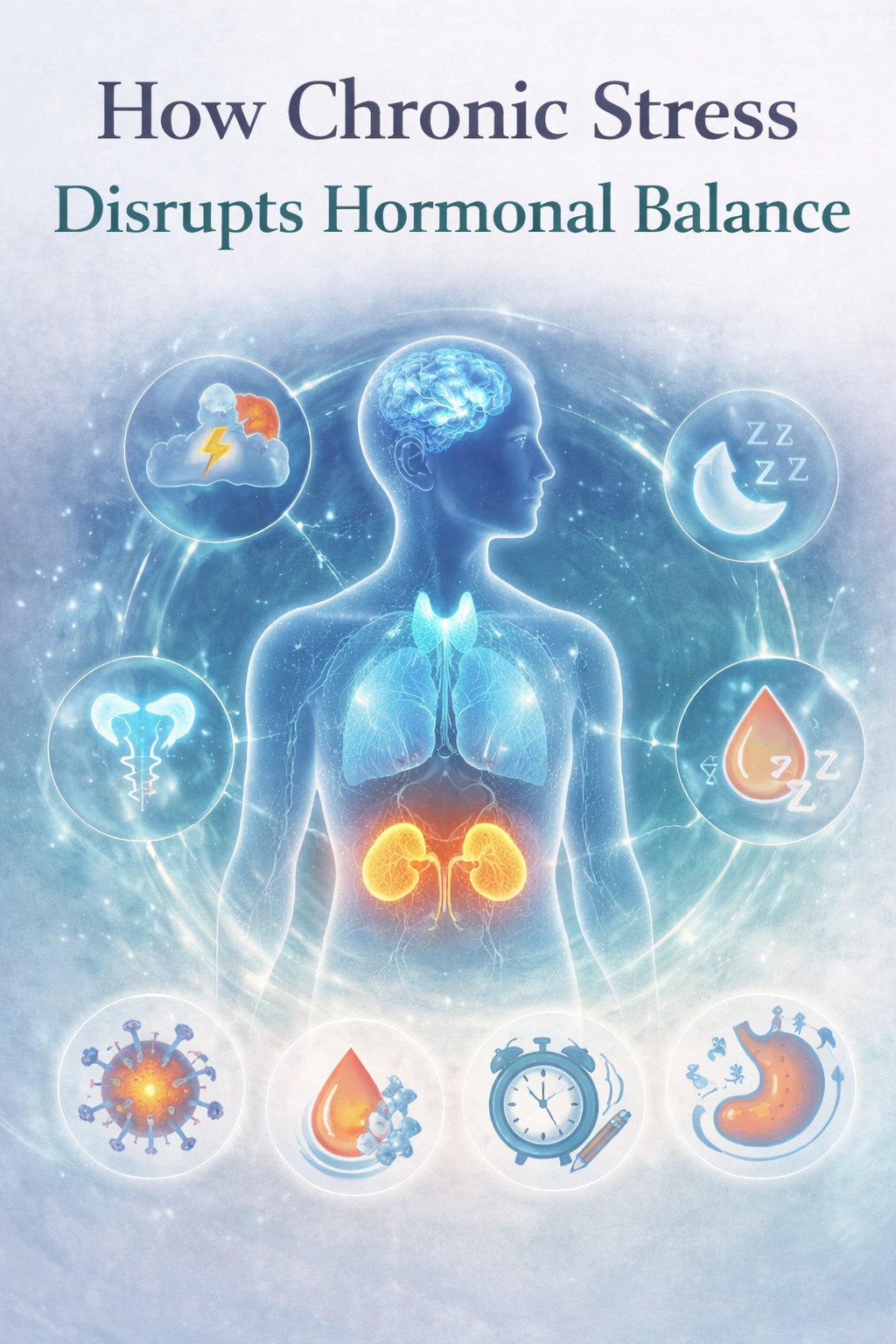
Chronic stress can influence hormonal balance through multiple pathways, particularly via cortisol, sleep disruption, blood sugar instability, and inflammatory signalling.
While stress is unavoidable at times, improving recovery and building consistent health habits can support resilience. When the body feels safer and more regulated, energy often becomes steadier, cravings reduce, and overall wellbeing improves.